
Holding the Vision of Love
When life feels confusing, or the same thoughts keep circling, a new perspective can reveal a next step. ChakraKey uses symbols, reflection, and a heart-centered practice to help you understand yourself, explore your gifts, and bring what matters to you into everyday life.
Expand your imagination. Create a life you love.
Begin with a quiet moment. No previous chakra knowledge is needed.
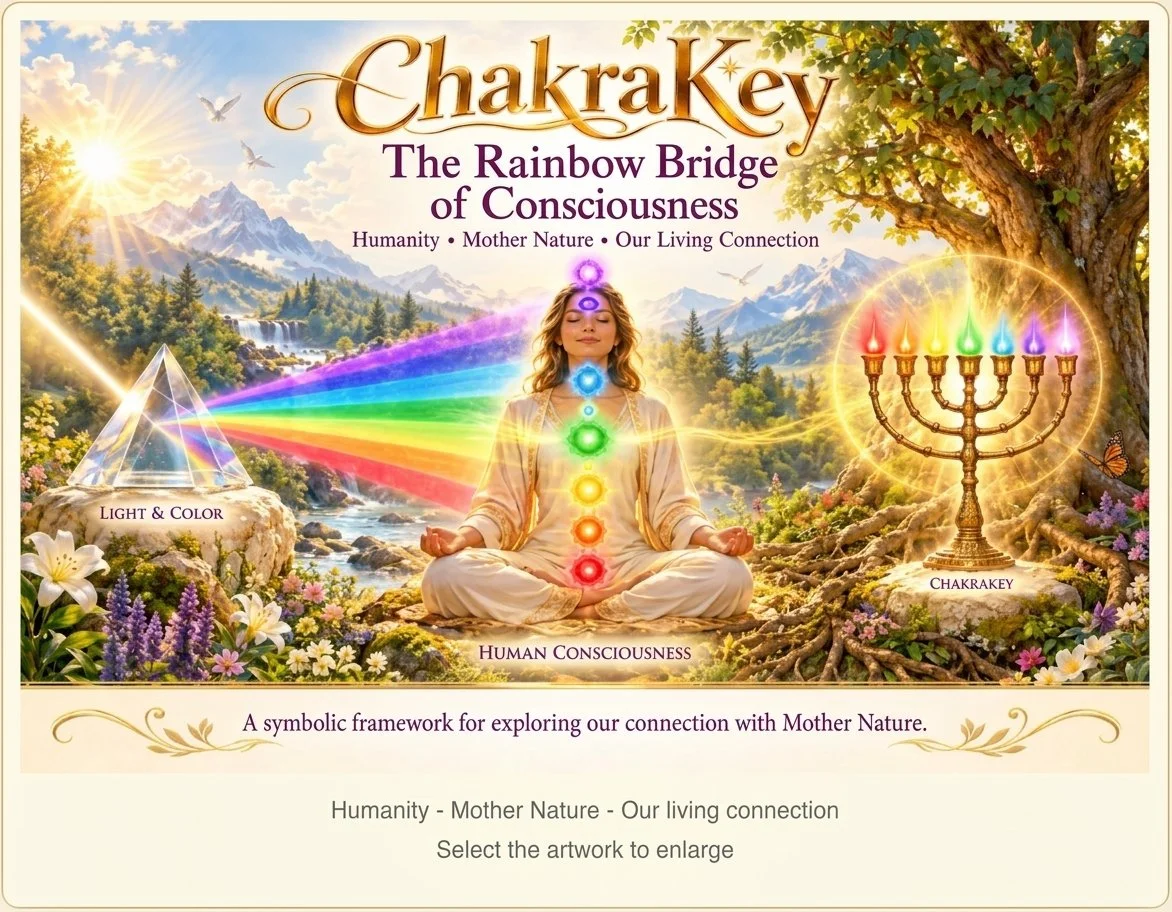
Imagine what could be. Listen to your heart. Bring love into the world.
01 / A moment for love
Rest a hand over your heart, if that feels comfortable, and take a few easy breaths. Bring to mind a person, place or moment you appreciate.
You can listen to the optional 312 Hz tone or stay with silence. Notice your own experience; there is no particular sensation you need to feel.
Before you seek an answer,
come home to yourself.
The Heart Experience
A little space for love.
Listen softly, or practice in silence.
The tone is stopped. You can continue in silence.
312 Hz is used in ChakraKey’s contemplative practice. It is an invitation to notice, not a promise of a particular effect.
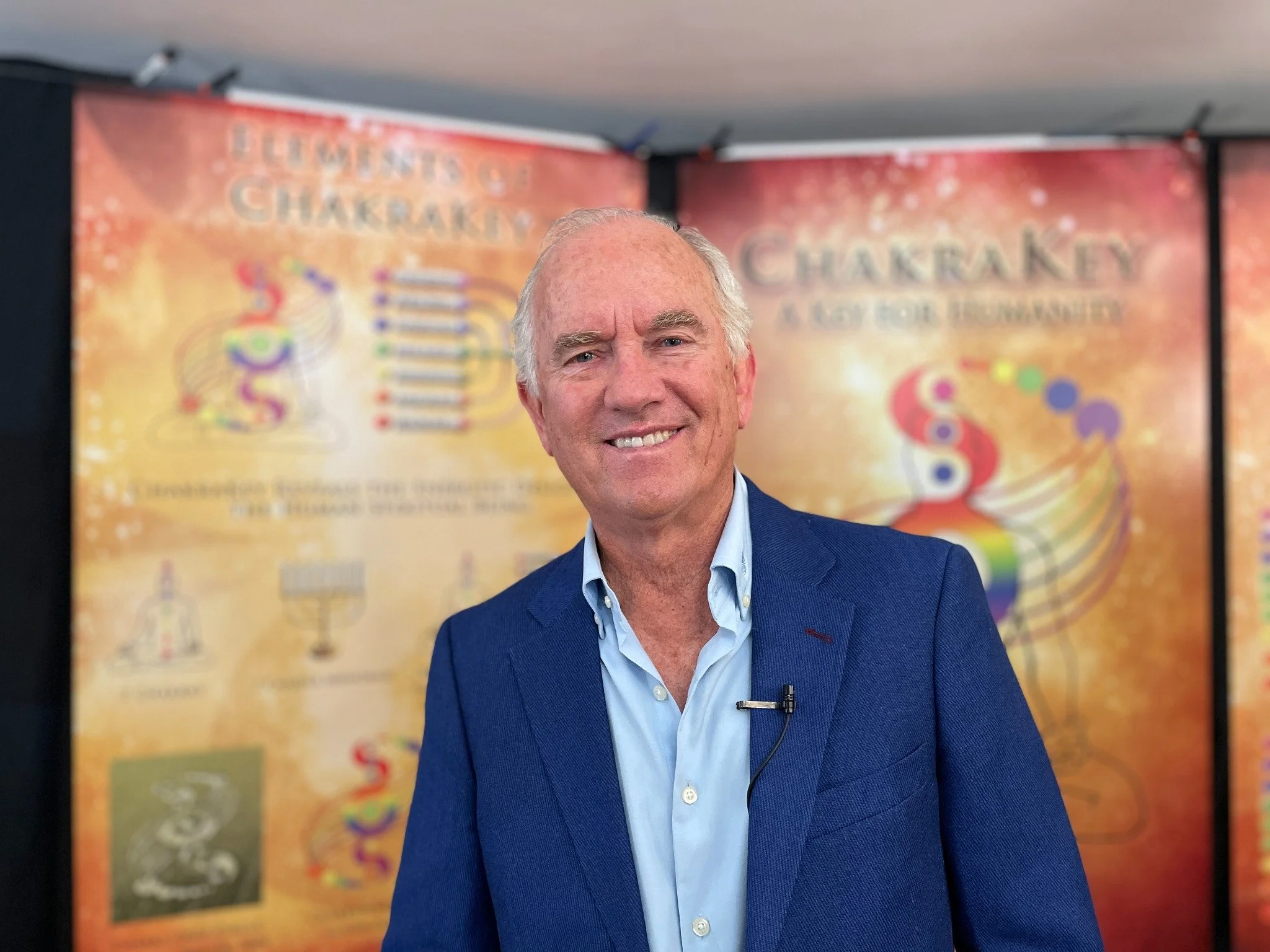
Meet your guide
Continue with Rick’s introduction, then explore the symbols and the possibilities they invite you to consider.
Rick introduces ChakraKey.
Video placement: reuse the existing introduction here in Squarespace. Confirm its duration and captions. The video is not embedded in this offline file.
02 / Your beautiful nature
There is a whole world within you.
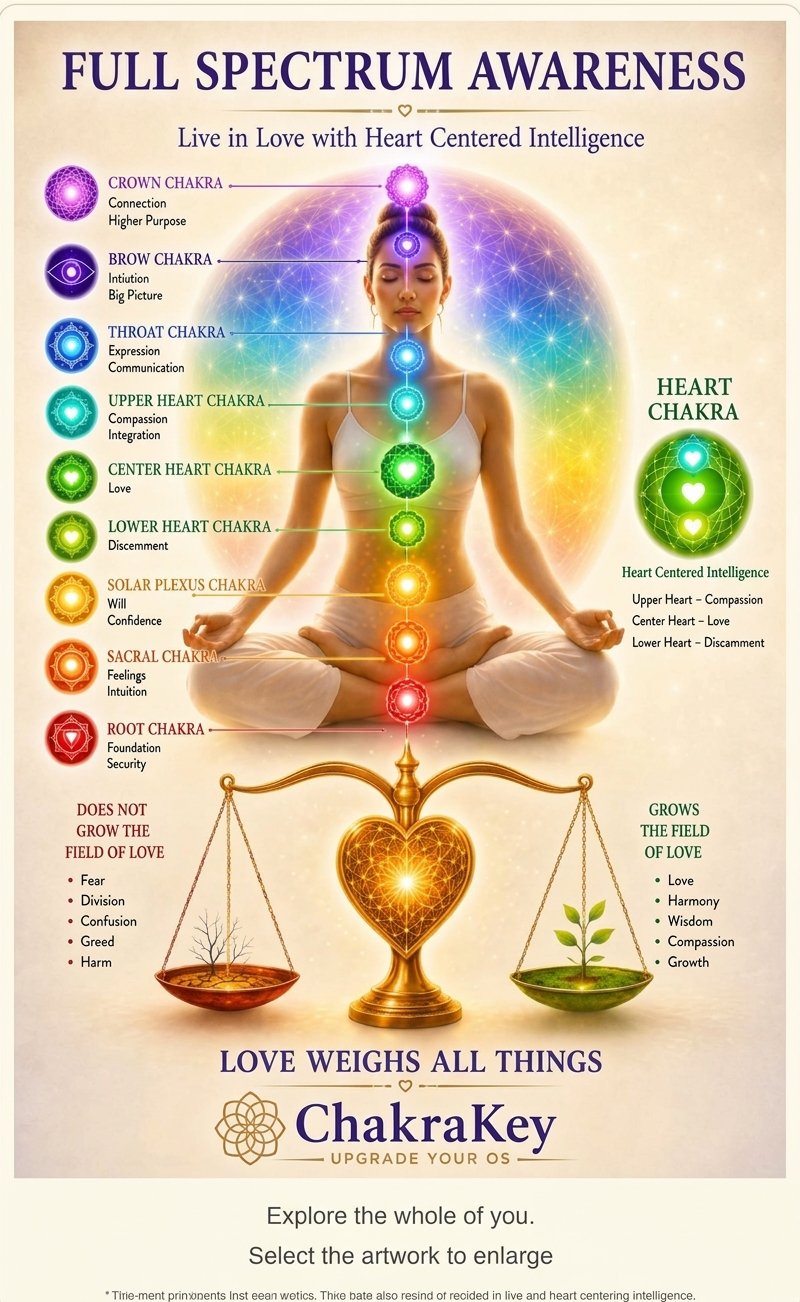
ChakraKey brings seven primary chakras into a nine-center map by looking at the heart in three parts: Lower Heart, Center Heart, and Upper Heart.
The symbols offer a way to reflect on what you are feeling, what matters to you, and how you want to respond.
Choose a center to explore
If you are hesitating to share an idea, consider both the confidence to act and the words you want to use. What would a kind, honest next step look like? The Compass invites you to reflect on the Solar Plexus and Throat through the heart.
03 / The discovery story
My search began in 2002 with a question: What is love, and how can it guide our choices? Five years later, turning a Menorah sideways beside a chakra figure revealed a connection that stayed with me. A crop-circle photograph I encountered in 2010 added another layer. With illustrations produced by Chris O Sullivan at MGN Online, those observations became ChakraKey, which I self-published in 2012. Here is how the symbols came together—and why I continue to explore them.
How I came to create ChakraKey.
ChakraKey grew out of a question I could not let go: What is love, and how can it guide us through the difficult choices we face?
The question that started my search
In 2002, I was living in Vintà, California, and working for a graphics company in nearby Cardiff. After seeing disturbing protest images in my neighborhood, I found myself wrestling with a difficult moral question. On a walk the next day, I brought it up with my friend Jim.
Jim encouraged me to consider the circumstances and what a loving response would mean. His answer stayed with me. If love could help us navigate this difficult, perhaps it could guide us through many other parts of life. But what, exactly, was love?
I spent the next five years reading and searching. At times, I became frustrated enough to wonder whether I would ever find an answer that made sense to me. My search led me to the chakra system. The association between the heart and love resonated with something I could recognize in my own experience.
A different way of seeing the Menorah
Jim was also interested in the seven-branched Menorah. At study, I had two images on my desk: a seated figure with seven chakras and a Menorah. I turned the Menorah sideways and placed it beside the figure.
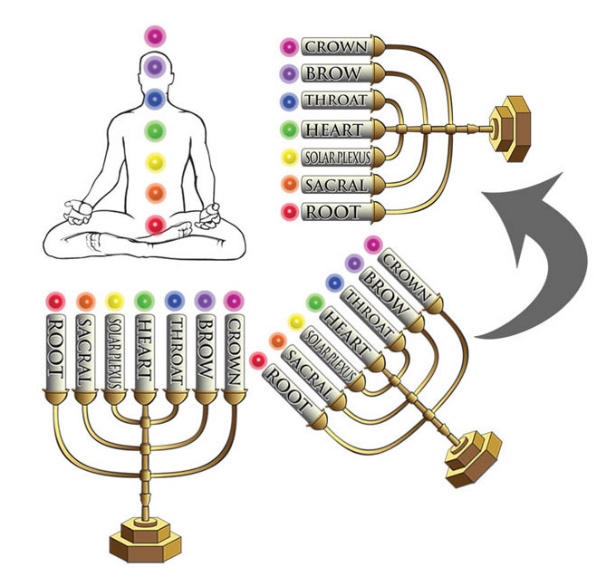
The seated chakra figure and the Menorah as seen side by side in Rick’s memory.
The central stem lined up with the heart. The branches appeared to connect the centers above and below it in three pairs: Root and Crown, Sacral and Brow, Solar Plexus and Throat. Each relationship passed through the heart.
That was an important moment for me. I had found a visual connection I wanted to understand. I did not immediately set out to write a book. I continued studying love and the Menorah.
A third symbol entered the picture
In 2006, I came across a photograph of a crop formation that had appeared in England the previous year. It was the Windmill Hill formation near Avebury, rounded on 23 May 2005. To my eye, its pattern echoed the seven-center chakra figure.
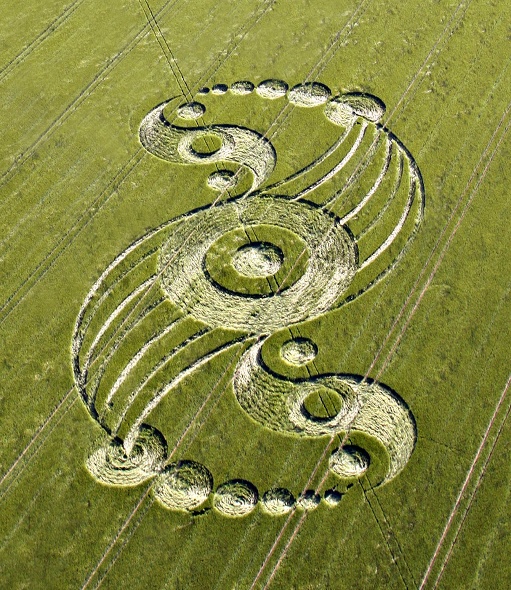
Photographed formation - 2005
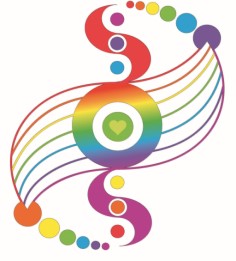
Line art comparison
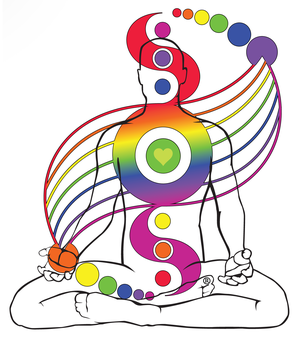
Seated chakra figure overlay
Recompense reference - windmill hill photographs: credit and permission: aerial image regions of the sun circle illustrations by her permission.
Now I had three images to consider together: the chakra figure, the sideways Menorah, and the crop circle pattern. The connections I saw suggested a way to illustrate our spiritual life. I believed there was enough here to make a book.
Working in graphics helped me turn these ideas into a visual guide. Chris O Sullivan at MCN Online produced the illustrations, and I self-published ChakraKey in 2009. Color became a way to organize the images, with the rainbow and prism offering a visual language for the relationships I was exploring.
Exploring sound with Jan Spiller
My questions also led me to sound. Jan Spiller and I traveled to New York to work with musician Hugh Fox. Using a chart that associated sound with color, we explored different tones and the sensations they brought to our attention.
We began with 432 Hz, which we associated with the Root chakra. Jan described feeling a response in her body. I began exploring what I could feel with my hands as well. We continued through other tones and developed the associations used in ChakraKey today.
These were personal, experiential explorations. The sensations we noticed helped shape the practice I share; they were not measurements establishing the natural frequency of a chakras. I invite people to explore gently and notice their own experience, without needing to feel what someone else reports.
Why I share ChakraKey
I see ChakraKey as an illustrated guide for exploring our inner life. The symbols help me consider how different parts of our experience relate to one another and how the heart can inform our choices.
My hope is that this work helps you recognize your own capacity for love and creative expression. Bring a real question from your life. Consider it with curiosity, listen to what matters to you, and choose a practical next step that expresses greater kindness.
The question that began this journey still guides us: How can we bring more love into the way we live?
Namaste,
Rick
What each symbol adds
The chakra figure: supplies the starting map. The rainbow and prism: supply a visual language of color. The Menorah: illustrates Rick’s three pairings through the heart.
Yin and yang: invites consideration of complementary qualities. ChakraSynergy: shows Rick’s visual synthesis. The Compass: turns the relationships into reflection on a real situation and a practical next step.
Book illustrations: Chris O Sullivan at MCN Online. ChakraKey was self-published in 2009.
The symbol associations are Rick’s interpretation. Formation date reference: Windmill Hill photographic archive ↗. The full historical references and publication credits are in the accompanying developer package.
04 / From imagination to expression
Beauty may take the form of a garden, a painting, a new beginning, a thoughtful conversation, or a small act of kindness. Begin with something that matters to you.
What would you love
to bring into the world?
01 / Possibility
02 / Love
03 / Action
Your words stay on this page and are not sent to a server. Download them before closing or refreshing the file.
Your reflection download has been requested. Check your browser’s Downloads.
Keep growing
Make self-understanding
a living practice.
Explore the symbols. Return to your heart. Bring what you learn into the choices that shape your days.
The Symbols
See how the chakra figure, Menorah and ChakraSynergy came together in Rick’s discovery.
The Compass
Bring a real concern into reflection. Consider a complementary perspective and choose a thoughtful next step.
Life Mastery
Explore the existing course information and continue developing a practice of self-understanding.
Homepage completion: insert Rick’s verified testimonials and connect the approved free-guide signup through Brevo here. Those production services are not connected to this preview.
Rick Ireton · Creator of ChakraKey
About the creator
Meet Rick Ireton.
Rick Ireton is the creator of ChakraKey, an illustrated framework for spiritual reflection and self-understanding. He self-published the book in 2012, with illustrations produced by Chris O Sullivan at MGN Online. His background includes graphics, invention and commercial development.
From 1983 to 1987, Rick served as Vice President of Sales at Surf-Tech Corporation in Escondido, California. During that period, the company’s team developed 16 wave machines used throughout the United States, Canada and Europe, helping transform wave pools into surf parks. Rick is also the named inventor on U.S. Patent 6,488,296 for a small-wheel disc brake, issued in 2002.
His interest in the chakra system grew from a personal search into the meaning of love. He explored ChakraKey’s tone practices with Jan Spiller, including a visit to musician Hugh Cox in New York.
Read how the symbols came together →
Mechanical invention record: US Patent 6,488,296 ↗.
The vision we hold together
Let love become something we live.
“Our goal is to merge into oneness of love and kindness with all of humanity.”
RICK IRETON · CREATOR OF CHAKRAKEY
Oneness makes room for our differences. We grow through care for one another and for the living Earth that sustains us.